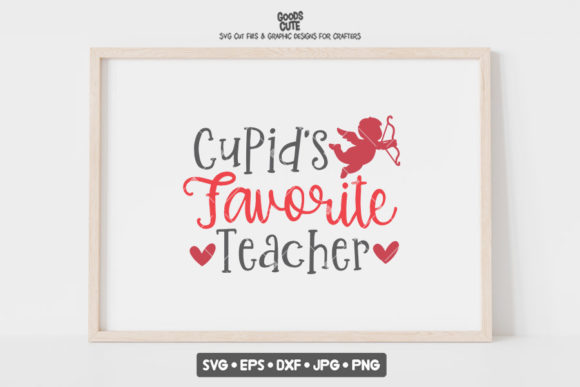
Cupid's Favorite Teacher SVG: An Embroidery Review
As a designer who spends more time behind an embroidery hoop than a computer screen, I approach every new graphic with a specific question: will this actually stitch out well? When I first opened the Cupid's Favorite Teacher - Valentine SVG, I wasn't just looking at a digital asset for vinyl or sublimation. I was evaluating its potential as a machine embroidery design for the upcoming school appreciation season. While the product description highlights its optimization for car decals and mug printing, my focus is strictly on how this artwork translates into thread, texture, and tangible handmade products.
First Impressions and Visual Personality
The initial mood of this graphic is undeniably sweet without being overly juvenile. It strikes that difficult balance required for teacher gifts—professional yet affectionate. Visually, the layout suggests a centered composition that would naturally fit within a standard 4x4 or 5x7 hoop size. For an Etsy seller or craft business owner, this versatility is key. The design elements appear distinct enough to allow for color blocking, which is essential when converting vector graphics into embroidery files.
However, because this file is marketed primarily as a cut file and sublimation asset, there are immediate considerations for digitizers. Vector lines meant for vinyl plotters do not always account for thread pull compensation. Before loading this into your machine software, you must assess whether the intricate details of Cupid’s wings or the typography are suitable for satin stitch columns or if they require modification to prevent puckering on stretchy fabrics.
Real-World Application: The Teacher Tote Bag Test
To truly evaluate this design, I mentally placed it onto a canvas tote bag—a staple personalized gift for educators. In this scenario, the Cupid's Favorite Teacher - Valentine SVG serves as the focal point of a functional item. Canvas provides a stable base, but it also has a pronounced fabric texture that can swallow fine details.
If I were stitching this for a client, I would likely treat the heart or cupid silhouette as an applique design. Using fabric for the main shapes reduces stitch density significantly compared to a full fill stitch. This makes the finished tote bag design lighter, softer, and less prone to distorting the bag's shape. The text element, presumably "Cupid's Favorite Teacher," would need careful attention. If the font includes thin serifs or script tails, those areas must be widened in the digitizing software to accommodate a minimum column width, ensuring the needle doesn't perforate the fabric excessively.
For sweatshirt embroidery, the strategy shifts. Fleece and French terry are unforgiving surfaces for tiny details. Here, the boldness of the original SVG works in our favor. I would simplify any internal shading lines from the vector file, converting them to open running stitch accents rather than dense fills. This maintains the visual hierarchy while respecting the limitations of the material. A teacher receiving this custom apparel needs it to withstand washing; therefore, securing applique edges and checking bobbin tension against the top thread colors is non-negotiable.
Navigating Fabric Limitations and Hoop Constraints
Not every project is a stable canvas tote. When applying this design to thinner or stretchier materials, caution is required. As a reviewer, I have seen too many beautiful vectors turn into thread nests on jersey knits because the digitizer ignored the source file's complexity.
- Stretchy Fabrics: If using this for baby onesies or lightweight tees, a cutaway stabilizer is mandatory. The design’s center-heavy layout requires adequate support to prevent tunneling.
- Dark Fabrics: Since this is a Valentine’s theme, users often choose red or pink garments. Ensure your digitized version includes proper underlay stitches to prevent the dark fabric grain from showing through light-colored satin stitches.
- Small Hoops: If resizing for a 4x4 hoop or cap frame, verify that the text remains legible. Letters smaller than 4mm in height often fail in embroidery. You may need to stack the text vertically or remove secondary taglines found in the original SVG.
- Curved Surfaces: For caps, the flat perspective of a standard SVG must be arced. Attempting to stitch a straight horizontal line across a curved cap brim will result in misalignment and poor registration.
Commercial Viability for Makers and Sellers
For the small shop product lineup, this design offers strong seasonal relevance. Teachers appreciate recognition, and a well-executed embroidered patch or kitchen towel feels more permanent and thoughtful than a printed card. However, professionalism hinges on execution. A jagged outline or loose tension destroys buyer trust instantly.
When creating printable mockups for your listings, be honest about the output. Do not use a flat digital rendering of the SVG as your primary photo if you are selling embroidery. Customers need to see how the digital embroidery file interacts with real thread sheen and fabric weave. Showcasing the actual stitched sample builds confidence and reduces returns. Furthermore, clearly distinguish between the vinyl/sublimation capabilities mentioned in the product description and your specific embroidered offering. This clarity helps manage customer expectations regarding texture and durability.
Essential Designer Notes Before Stitching
Because the Cupid's Favorite Teacher - Valentine SVG is optimized for cutting and printing rather than stitching, please adhere to these practical guidelines before starting any commercial embroidery or personal project:
- Verify Licensing: The description mentions possibilities for mugs and decals but does not explicitly detail embroidery licensing terms. Always confirm you have the right to sell finished embroidered goods or distribute the digitized file before listing items.
- Test on Scrap: Never run a converted vector design directly on a final product. Test on a scrap of the exact same fabric and stabilizer combination you intend to use.
- Check Contrast: View your digitized file in black and white within your software. This reveals whether the design relies too heavily on color contrast rather than structural stitch definition.
- Density Audit: Calculate the total stitch count relative to the size. If a 3-inch design exceeds 15,000 stitches, it is likely too dense for most apparel and needs editing.
- Format Compatibility: Ensure your machine reads the specific embroidery file format generated from this SVG conversion. DST, PES, and JEF all handle jump stitches and trims differently.
Final Thoughts on Design Adaptation
The Cupid's Favorite Teacher - Valentine SVG is a charming starting point for holiday embroidery and teacher appreciation projects. Its strength lies in its clear thematic messaging and adaptable layout. However, its origin as a cut file demands respect during the digitizing process. Success with this design isn't about the file itself, but about the maker's willingness to adapt it for the physical realities of needle and thread.
Whether you are creating a boutique collection of teacher sweatshirts or a single custom apparel piece for a favorite educator, treat this graphic as a blueprint rather than a final pattern. With proper stabilization, thoughtful density management, and rigorous testing, this design can transition beautifully from screen to stitch, resulting in a finished product that honors both the artistry of the original graphic and the craftsmanship of embroidery.