Teacher Rule SVG: A Designer’s Embroidery Review
As a professional embroidery designer and product reviewer, I approach every new digital asset with a critical eye. When evaluating the Teacher Rule SVG for potential use in client projects or shop inventory, my first concern is always translatability. A graphic that looks crisp on a screen does not always stitch out cleanly on fabric. After examining this design file, I see significant potential for the education niche, but success depends entirely on how you adapt these vector graphics into a functional machine embroidery design. The aesthetic is bold and typographic, suggesting a modern, confident vibe that resonates well with educators, but it requires careful technical planning to ensure the final handmade product meets professional standards.
First Impressions and Design Personality
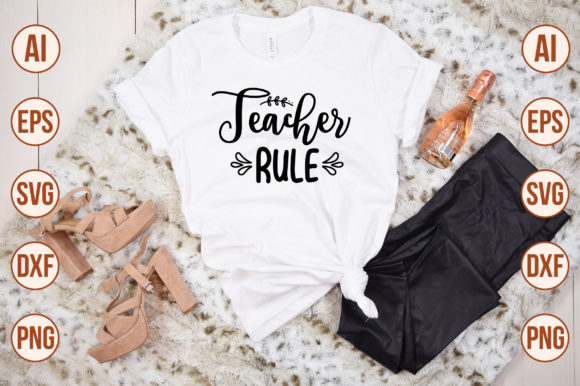
The visual personality of the Teacher Rule SVG leans toward structured authority mixed with playful dedication. In the realm of Crafts and Graphics, typography-heavy designs are currently dominating the teacher apparel market. This specific layout feels balanced, avoiding the cluttered look that often plagues novelty educational merchandise. As a digital embroidery file source, the clean lines suggest it will convert well into satin stitch borders or fill stitch lettering, provided the font weight is sufficient. For an Etsy seller or small shop product creator, this design communicates professionalism. It doesn't look like a generic clip-art paste job; it has the intentionality required for boutique branding. However, because this is a vector graphic package including AI, EPS, SVG, DXF, PNG, and JPEG files rather than a pre-digitized embroidery file, you must verify that your digitizing software can import these formats cleanly before committing to a production run.
Real-World Application: The Custom Sweatshirt Test
To truly evaluate this asset, I mentally placed it in a real-life scenario: creating a custom embroidered sweatshirt for a teacher appreciation gift or a staff uniform order. Sweatshirt fleece is a forgiving yet tricky canvas. The nap of the fabric can swallow fine details, so when adapting the Teacher Rule SVG for this application, I would prioritize bold elements over intricate serifs. If I were stitching this onto a crewneck, I would likely use a cutaway stabilizer to prevent puckering around the text blocks. The design’s hierarchy works beautifully for center-chest placement, allowing for personalization—like a name or school year—to be added below without disrupting the visual balance. For a tote bag design, the same graphic could be scaled up significantly, perhaps utilizing applique techniques to reduce stitch count while maintaining high visual impact. This versatility makes it a valuable asset for creative entrepreneurs looking to maximize one design across multiple product types.
Technical Considerations for Stitch Clarity
While the Teacher Rule SVG offers excellent bones for embroidery, there are specific technical constraints to watch. Typography is the most unforgiving element in machine embroidery. If the original vector lines are too thin, they cannot support a standard satin stitch column without risking thread breaks or fabric perforation. Before stitching, you must assess the stroke width. Any element thinner than 1mm may need to be converted to a running stitch or thickened in your digitizing software. Stitch density is another critical factor; packing too many stitches into the lettering on a stretchy knit fabric will result in a stiff, bulletproof patch that ruins the garment's drape. Conversely, insufficient density on a textured towel will cause the design to get lost. Always test your digitized version on scrap fabric that matches your finished product’s weight and texture. Never assume the default auto-digitize settings will respect the nuances of this specific graphic.
Navigating Fabric Limitations and Hoop Sizes
Not every substrate is suitable for this design without modification. On dark fabrics, ensure your thread colors provide adequate contrast; a navy design on a black shirt will disappear regardless of stitch quality. For curved surfaces like caps, the horizontal span of the Teacher Rule SVG might exceed the safe stitching area, requiring you to arc the text or resize the composition to avoid registration errors. Small hoop sizes present another challenge. If you are working with a 4x4 hoop, you may need to split the design or simplify the artwork to maintain legibility. Tiny lettering is the enemy of clarity; if the text scales down below a readable threshold, consider removing secondary taglines and focusing solely on the main "Teacher Rule" phrase. Additionally, products destined for frequent washing, such as baby embroidery items or kitchen tea towels, require secure underlay and proper topping to prevent the design from degrading over time. Always confirm your hoop size compatibility before purchasing or digitizing to avoid frustration mid-project.
Commercial Viability and Brand Consistency
For those running a craft business or selling on platforms like Etsy, the commercial viability of this design hinges on execution. Customers trust sellers who deliver crisp, clean embroidery that mirrors the digital preview. Using the included PNG or JPEG files for printable mockups helps set accurate expectations, but the physical product must match that promise. The Teacher Rule SVG supports brand consistency because its geometric nature pairs well with other structured educational designs in a collection. However, you must rigorously check licensing terms. While you possess the digital assets, verify whether you have the rights to sell finished embroidered products or if the license restricts usage to personal projects. Professionalism isn't just about stitch quality; it's about respecting intellectual property. For commercial embroidery projects, keeping records of your license ensures you can operate confidently and protect your business reputation.
Practical Designer Notes for Success
Before launching this design in your shop or gifting it to a client, follow this practical checklist derived from years of embroidery experience:
- Test Stitch First: Never run a final product without a sew-out on similar fabric. Check for gaps, puckering, or illegible text.
- Verify File Compatibility: Ensure your embroidery software or cutter (if doing vinyl) accepts the provided AI, EPS, SVG, DXF, PNG, or JPEG formats without corruption.
- Assess Stabilizer Needs: Match your stabilizer to the fabric. Use tear-away for stable wovens and cutaway for knits to preserve the design's integrity.
- Check Thread Contrast: View your thread selection against the actual fabric in natural light. Digital screens are deceptive.
- Review Licensing: Confirm specifically if the Teacher Rule SVG allows for commercial sale of physical embroidered goods versus digital redistribution.
- Mockup Accuracy: Use the high-resolution PNG for listings, but add a disclaimer that slight variations in stitch texture are normal for handmade products.
- Scale Appropriately: Do not force the design into a hoop size that compromises detail. It is better to offer fewer size options than poor-quality ones.
Ultimately, the Teacher Rule SVG is a strong foundation for apparel decorators and makers serving the education community. Its success lies not in the download itself, but in the thoughtful translation from vector graphic to tactile reality. By respecting the technical demands of machine embroidery and validating the design through rigorous testing, you can transform this digital asset into a best-selling personalized gift or a cherished piece of custom apparel. Remember that in our industry, quality is the ultimate marketing tool. Take the time to digitize correctly, test thoroughly, and present honestly, and this design will serve your creative business well.