Tote Bag SVG Teacher Stuff: A Designer’s Review
First Impressions: Visual Personality and Layout
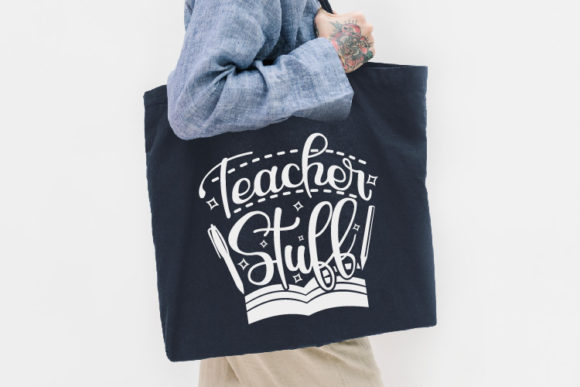
When evaluating Tote Bag SVG Teacher Stuff for a new collection, my first focus is always on the visual hierarchy and emotional resonance. As a designer who creates both digital assets and finished goods, I look for graphics that translate seamlessly from screen to stitch. This design immediately strikes a balance between professional appreciation and whimsical charm. The layout suggests a versatility that goes beyond simple novelty; it feels like a genuine tribute to the profession rather than a generic clip-art assembly.
The mood is warm and inviting, which is crucial for personalized gifts or boutique merchandise. In the realm of Crafts, teacher-themed items can sometimes feel cluttered or overly juvenile. However, this graphic maintains a clean aesthetic that respects the sophistication of adult apparel and accessories. The lines appear optimized for conversion into a machine embroidery design, avoiding the jagged edges or excessive nodes that often plague low-quality Graphics. For an Etsy seller or small shop owner, this level of polish matters because it signals quality to the buyer before they even see the physical product.
Real-World Application: Stitching the Custom Tote
To truly understand the value of this file, I mentally walked through a recent client project involving custom canvas tote bags for a school district fundraiser. We needed a design that would read clearly from a distance but still hold up to close inspection. Tote Bag SVG Teacher Stuff fits this specific use case remarkably well. Canvas is a textured fabric that demands confident stitching; timid lines get lost in the weave.
In this scenario, I envision utilizing a combination of techniques. If converting this SVG into an applique design, the bold outer shapes provide excellent coverage for the fabric edge, reducing bulk while adding dimension. For the internal details, a mix of satin stitch borders and fill stitch centers would create necessary contrast without making the bag stiff or heavy. This balance is vital for a tote bag design because customers want a functional item, not a rigid board. The visual weight of this graphic allows for high-impact commercial embroidery where production speed and thread usage must be balanced against perceived value.
Expanding Beyond Bags: Apparel and Home Decor
While the title highlights tote bags, my review confirms this asset is highly adaptable for custom apparel and home goods. I can easily see this working as a centered chest placement on a crewneck sweatshirt or as a pocket-sized motif on a denim apron. For baby embroidery projects, such as a "Teacher's Kid" bib or blanket, the design could be scaled down, provided the lettering remains legible. The versatility here supports a diverse product line, allowing makers to offer matching sets—perhaps a mug and a shirt—which increases average order value for Etsy sellers.
Technical Considerations and Fabric Limitations
Despite its strengths, no design is universal. When planning to use Tote Bag SVG Teacher Stuff, you must consider the substrate. While it excels on stable woven fabrics like canvas, denim, and twill, caution is required for stretchy knits or sheer materials. The density required to render this graphic cleanly may cause puckering on lightweight t-shirts unless you employ a cut-away stabilizer and potentially a topping.
I also advise careful evaluation if you intend to use this on curved surfaces like caps. Depending on the aspect ratio of the original SVG, the design might need re-digitizing to fit the limited vertical space of a hat frame without distorting the proportions. Furthermore, if your project involves tiny text elements within the graphic, verify that they are large enough to stitch out clearly. Text smaller than 4mm often requires specialized digitizing adjustments to prevent thread breaks or illegibility. Always check the minimum recommended hoop size before purchasing or stitching to ensure your machine can accommodate the full design area without excessive re-hooping.
Navigating Dark Fabrics and Contrast
Visual appeal relies heavily on contrast. If you are stitching this onto black or navy fabric, standard thread colors may disappear. You will likely need to add a white underlay or adjust the thread colors in your software to lighter pastels or metallics to maintain definition. Test stitching on a scrap of the actual dark fabric is non-negotiable here. A design that looks vibrant on a white screen can look muddy on charcoal cotton. This step ensures your finished product meets customer expectations and avoids costly rework.
Professional Standards for Makers and Sellers
For those running a craft business, professionalism extends beyond the stitch quality to licensing and presentation. Before listing any item made with Tote Bag SVG Teacher Stuff, strictly review the license terms included with the download. Confirm whether you have rights for physical products only, or if digital derivatives are permitted. Never assume commercial rights cover all use cases; protecting your business means respecting intellectual property.
Presentation is equally important. Use printable mockups or photograph actual samples to show how the design interacts with fabric texture. Buyers need to visualize the scale and placement. A flat digital image does not convey the tactile reality of embroidery. Showing the design on a real tote, shirt, or pillow builds trust and demonstrates that you understand how design assets translate to tangible goods. This transparency reduces returns and enhances your brand reputation as a skilled maker.
Designer Notes for Optimal Results
- Test First: Always run a sew-out on scrap fabric similar to your final project to check tension and registration.
- Check Density: Review the stitch density in your software. If the design feels too thick for baby clothes, reduce the fill density or switch to running stitches for interior details.
- Stabilizer Selection: Match your stabilizer to the fabric weight. Use tear-away for stable totes and cut-away for stretchy apparel to prevent distortion over time.
- Color Planning: Create a thread chart before starting. Ensure adequate contrast between the design and the base material, especially for intricate details.
- Licensing Compliance: Verify if the file allows for modification. Some licenses prohibit altering the design, which limits your ability to resize or simplify for different applications.
- Mockup Accuracy: When creating listings, use realistic lighting and shadows in your mockups to accurately represent the sheen of embroidery thread versus matte vinyl.
Elevating Your Handmade Product Line
Ultimately, Tote Bag SVG Teacher Stuff represents more than just a seasonal graphic; it is a foundational asset for building a cohesive teacher-appreciation collection. Its strength lies in its adaptability across mediums, from sturdy canvas bags to soft nursery textiles. By approaching this file with a critical eye toward technical execution and market positioning, you transform a simple SVG into a premium handmade product.
Success in embroidery comes from understanding the relationship between the digital file and the physical needle. Take the time to refine your process, test your variables, and respect the limitations of your materials. When executed with care, this design has the potential to become a bestseller in your shop, resonating with teachers who value craftsmanship as much as sentiment. Whether you are creating a holiday gift or stocking your shelves for back-to-school season, let practical design judgment guide your creative decisions.